

Tradescantea pallida purpurea (Setcreasea)
Tradescantea pallida purpurea (Setcreasea)
Couldn't load pickup availability
Common Name:
Purple Heart (also Purple Queen, Purple Spiderwort)
Description:
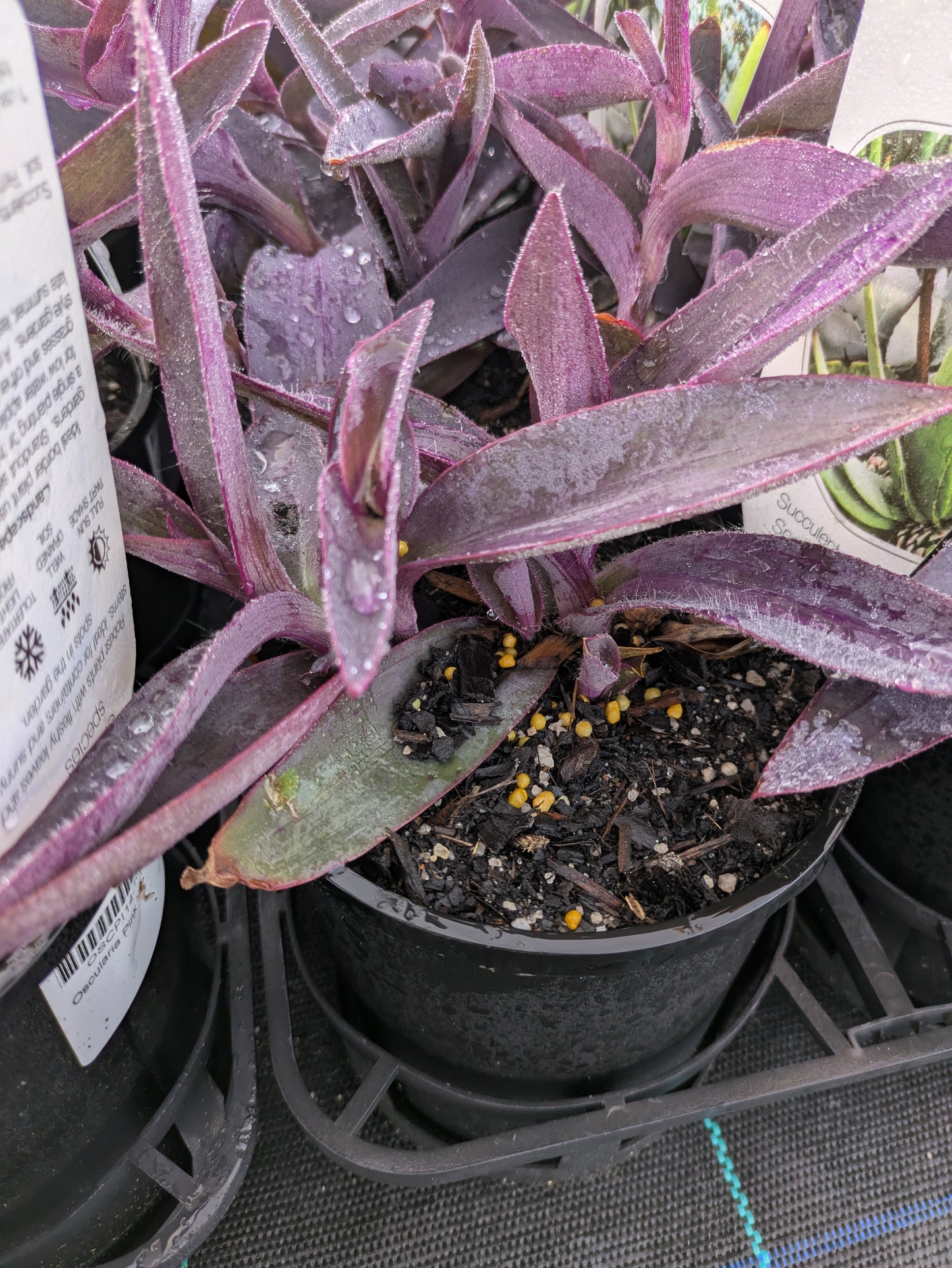
Tradescantia pallida ‘Purpurea’ (syn. Setcreasea purpurea) is a striking evergreen perennial revered for its dramatic purple foliage and swift spreading habit. Originating from eastern Mexico, it features slender, pointed leaves up to 15 cm long, arranged along delicate, segmented stems. These stems are easily broken but take root readily, making propagation a breeze. During warmer months, the plant produces clusters of small, three‑petalled flowers in shades of pink to magenta, often with yellow stamens, providing a lovely contrast to the dark leaves. It thrives in moist yet well‑drained soil, and gains its richest purple tone with bright light or morning sun. It is adaptable to a range of environments: ideal in containers, hanging baskets, as a ground cover, or even as a bedding plant in frost‑free zones. While it tolerates drought and heat, it benefits from regular watering in summer and slightly reduced moisture in winter. In cooler climates, it may die back with frost but will resprout in spring. This cultivar is relatively pest‑resistant and has been awarded the RHS Award of Garden Merit.
Form:
-
Ground Cover
-
Shrub – Clumping / Mounding
-
Climber (trailing habit suitable for baskets/walls)
Mature Size:
-
Height: 15–30 cm
-
Width (spread): 30–60 cm
Aspect:
-
Full Sun
-
Part Shade
-
Indoors / Well-lit (for container-grown plants)
Flowering:
-
Flowers in Spring
-
Flowers in Summer
-
Flowers into Autumn in warm climates
Flower Colour:
-
Pink
-
Magenta (with yellow stamens)
Key Attributes:
-
Suitable for Pots
-
Drought Tolerant
-
Low Maintenance
-
Striking Purple Foliage
-
Rockery / Container Friendly
-
Pollinator Friendly (bees, butterflies)
-
Ground Cover
-
Perennial (in frost-free zones)
-
Fast-spreading via rooting stems
-
Deer Resistant
-
Ideal for Hanging Baskets or Cascading Displays
-
Air-purifying indoors
Negative Attributes:
-
Can become invasive in ideal conditions—may naturalise vigorously
-
Frost sensitive—dies back below ~–1 °C
-
Stems are fragile and break easily
-
Sap may cause mild skin irritation—wear gloves
Toxicity:
Mildly toxic to humans and pets; sap may irritate skin or cause mouth/throat discomfort if ingested.
Companion Plants:
-
Silvery foliage succulents (e.g. Senecio, Echeveria)
-
Soft-leaved perennials (e.g. lemon balm, lamb’s ear) for textural contrast
-
Bright-flowering annuals (e.g. vinca, petunia) to complement purple tones
-
Coastal or drought-tolerant grasses for movement contrast
Enter Your Postcode Below & Click 'Check' To See Delivery cost To Your Area
- Choosing a selection results in a full page refresh.
- Opens in a new window.