

Hydrangea petiolaris
Hydrangea petiolaris
Couldn't load pickup availability
Common Name:
Climbing Hydrangea
Description:
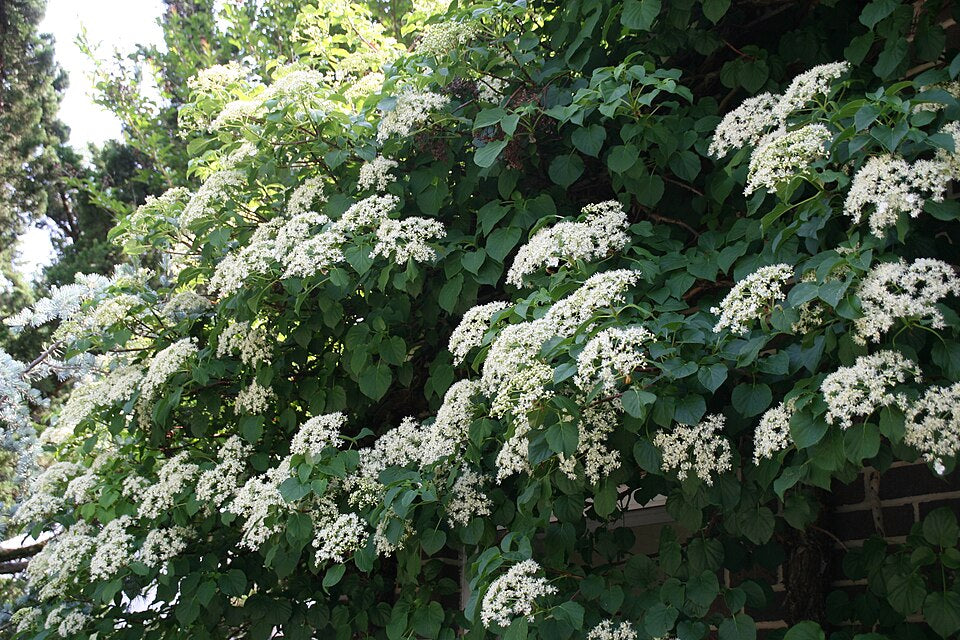
Hydrangea petiolaris is a deciduous self-clinging climbing plant prized for its elegant lacecap flowers, attractive foliage, and ability to thrive in shaded areas. During late spring and summer, it produces large flattened clusters of creamy white flowers made up of tiny fertile blooms surrounded by showy outer florets, creating a soft and romantic display. The lush green foliage turns buttery yellow in autumn before falling, while the textured brown stems provide winter interest. This slow-to-establish but vigorous climber attaches itself to walls, fences, tree trunks, and pergolas using aerial rootlets, making it ideal for covering shaded vertical surfaces. Well-suited to Melbourne’s climate, it performs best in moist, well-drained soil with protection from harsh afternoon sun. Once mature, it becomes a stunning feature plant in woodland, cottage, and formal gardens.
Form:
Climber
Mature Size:
Height: 8–12 m
Width: 3–5 m
Aspect:
Part Shade
Full Shade
Flowering:
Flowers in Spring
Flowers in Summer
Flower Colour:
Creamy white
White
Key Attributes:
Bee Attracting
Deciduous
Perennial
Suitable for Screening
Suitable for Shade Gardens
Textured bark
Toxicity:
Toxic if ingested by humans, dogs, and cats. May cause gastrointestinal irritation due to naturally occurring compounds within the plant.
Companion Plants:
Camellias
Hellebores
Ferns
Hostas
Azaleas
Japanese Forest Grass
Clivia
Heuchera
Enter Your Postcode Below & Click 'Check' To See Delivery cost To Your Area
- Choosing a selection results in a full page refresh.
- Opens in a new window.